Best Berberine Supplement for Blood Sugar 2026
Quick Answer: How Do You Pick the Best Berberine Supplement?
The best berberine supplement gives you a meaningful daily dose without making you swallow four or five capsules. Look for berberine HCl purity, third-party testing, an absorption-friendly format and a clear Supplement Facts panel. Skip labels that hide the amount inside a proprietary blend.
- Dose: a serving that moves you toward 1,200–1,500 mg/day, not a token amount.
- Quality: berberine HCl purity plus third-party testing.
- Trust: transparent label and an official store with a refund window.
Search volume tells a story, and the story here is a stampede. "Best berberine supplement" pulls around 12,100 searches a month, competition is high, and the trend is still rising into 2026 — which means shelves and search results are now crowded with products competing on packaging rather than on what is inside. This buyer's guide is built to fix that. Instead of ranking brand names, it hands you the five checks that actually separate the best berberine supplement from an underdosed lookalike, then shows where a standardized formula like Sugar Drop fits once you know what to measure.
The uncomfortable truth is that most people in this category overpay for underdosed products, then conclude "berberine doesn't work" when the real problem was the bottle. Get the fundamentals right and you avoid both mistakes at once.
What separates the best berberine supplement from the rest
Berberine itself is a commodity: the same plant alkaloid, sold by countless brands. So the differences that matter are not about the molecule but about how much of it you get, how pure it is, how well your body absorbs it, and whether anyone independent has verified the claims. Five checks cover almost everything worth knowing — dose, purity, absorption, transparency, and where you buy. Miss any one of them and the others cannot save the purchase. Nail all five and price becomes the only remaining variable.
Before you weigh a single product, it helps to be clear on what you are buying berberine for. If you are still deciding whether it belongs in your routine, our overview of the full range of berberine supplement benefits for blood sugar covers the mechanism and the realistic effect size. This guide assumes you have decided and now want to buy well.
Check 1 — Dose: 1,200–1,500 mg, and why the label total misleads
This is the single most important check, and the one most products quietly fail. Clinical trials that reported glucose benefits used roughly 1,200 to 1,500 mg of berberine per day, split across two or three doses. That is your benchmark. The trap is how brands display it: a label might shout "1,500 mg" on the front, but the fine print reveals that figure is the daily total across a four- or five-capsule serving. Read it as "you must swallow five capsules a day to get what we advertised" and the appeal fades fast.
So do the arithmetic every time. Divide the advertised amount by the number of capsules in a serving to find the real per-capsule dose, then ask honestly whether you will take that many, every day, for eight to twelve weeks. The dose that works is the one you actually take. A convenient format that reaches a meaningful daily amount will beat a "higher-dose" capsule stack that sits unused in a drawer by February. For the finer points of splitting and timing, our guide to how much berberine to take and when goes deeper than any label ever will.
Check 2 — Purity: berberine HCl and third-party testing
Not all berberine on the market is the same grade. The most researched and widely used form is berberine hydrochloride (berberine HCl), and reputable products state their purity. Vague labels that list only "berberine complex" or a proprietary botanical blend give you no way to know how much actual berberine is present — which is usually the point. Purity without verification is just a claim, so the second half of this check is third-party testing: an independent lab confirming that what is in the bottle matches the label, and that it is free of heavy metals and contaminants. A brand that pays for that testing tends to advertise it, because it is expensive and it is a genuine differentiator.
Skip the five-capsule routine
Sugar Drop delivers berberine-family metabolic support as a single standardized liquid dose, with a Supplement Facts panel you can read before you buy.
See the Official Sugar Drop OfferCheck 3 — Absorption: why raw berberine mostly goes to waste
Berberine has a well-known weakness: it is poorly absorbed. A large share of a standard dose never makes it into circulation, which is one reason trials had to use gram-scale amounts to see an effect. The better products address this directly — through enhanced-absorption delivery formats, or through related compounds designed to reach the bloodstream more efficiently. This is precisely why some shoppers weigh dihydroberberine versus berberine: dihydroberberine is a metabolite marketed for better bioavailability at a lower dose. Whatever form you choose, the principle holds — a smaller, better-absorbed dose can outperform a larger dose that mostly passes straight through you.
Check 4 — Transparency: read the panel, not the front
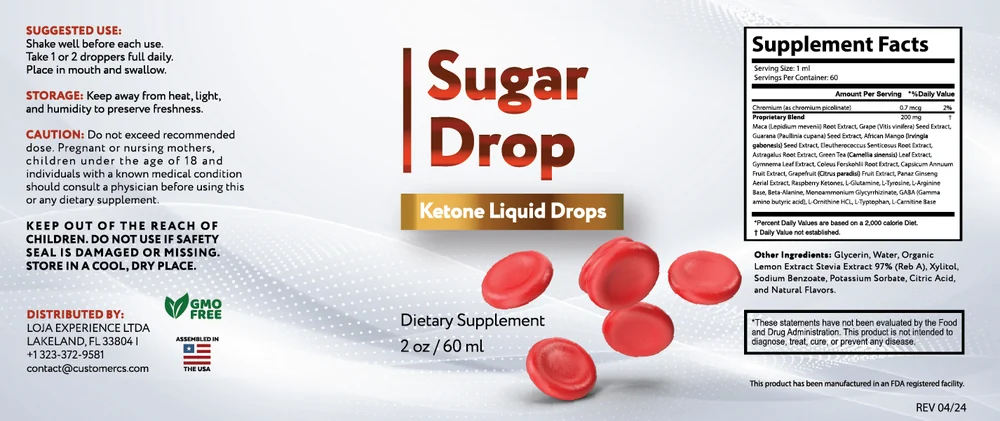
Everything above collapses into one habit: judge a product by its Supplement Facts panel, never by its headline. A transparent brand publishes the exact milligrams per serving, the form of berberine used, and the rest of the formula. An evasive brand buries berberine inside a "proprietary blend" with a single combined weight, so you cannot tell whether you are getting a research-relevant amount or a sprinkle. The category is full of the latter. When a brand will not show you the number, it is almost always because the number is disappointing — and no amount of packaging design changes that.
Check 5 — Where you buy it
The final check is the one shoppers skip most and regret most: the point of purchase. A supplement that passes every quality test above can still let you down if you buy a counterfeit, an expired bottle, or a grey-market unit that never saw the manufacturer's quality control. Third-party marketplaces are where those problems concentrate, because anyone can list a product and listings are hard to police. Buying from the brand's official store solves several problems at once — you get the current formula rather than old stock, you get the manufacturer's money-back guarantee rather than a reseller's "all sales final," and you can be confident the Supplement Facts panel you read is the one in the bottle. Treat the official store as part of the product, not an afterthought, and factor its refund window into the value calculation.
Objection: "The cheap one is basically the same molecule, right?"
The molecule, yes; the product, no. A rock-bottom price usually signals one of three things — a token dose, unverified purity, or a proprietary blend hiding how little berberine is inside. The reverse trap is assuming premium price guarantees quality; it does not. The fix is to ignore price as a proxy entirely and score each option on the four checks above, then compare prices only among products that pass. Viewed that way, the truly cheap option is the underdosed one you have to re-buy or abandon — it costs less per bottle and more per result.
Watch for "Berberine Belly": the tolerance objection
A rising complaint online is so-called "Berberine Belly" — bloating, cramping and loose stools that some people blame on the ingredient. In practice this is almost always a dosing problem, not an ingredient problem. It clusters around large single doses taken on an empty stomach, exactly the pattern a five-capsule "megadose" product encourages. Splitting the dose, taking it with food, and starting low resolves it for most people. This is the same tolerance logic we lay out in our guide to blood sugar supplement side effects and building tolerance, and it is one more argument for a measured, standardized serving over a brute-force capsule count.
How Sugar Drop stacks up against a capsule stack
Run Sugar Drop through the same five checks and its logic becomes clear. It is a liquid dropper format, which sidesteps the "swallow five capsules" problem that sinks adherence — the convenience is not a gimmick, it is what makes a daily habit survivable. It publishes its Supplement Facts panel, so you can verify the amount rather than trust a front-of-bottle number. And it is sold through an official store with a manufacturer's money-back guarantee, which is the right place to buy any supplement: third-party marketplaces are where counterfeits, expired stock and grey-market bottles accumulate.
To be straight with you, no single-format product will satisfy every buyer. If your priority is hitting the very top of the trial dose range in one sitting, a dedicated high-dose berberine capsule may suit you better — provided you will actually take it consistently. But if your priority is a verifiable dose in a format you will not quit, delivered by a transparent brand with a refund window, Sugar Drop is a sensible default for 2026. The best berberine supplement, in the end, is the one that scores well on the fundamentals and still ends up in your body every day — and for most people, convenience is the deciding factor between those two things.
Medical note: this article is general information, not medical advice. Berberine can interact with glucose-lowering, blood-pressure and blood-thinning medications. Talk to a healthcare professional before starting any berberine supplement, and do not use it if you are pregnant or nursing.
Frequently asked questions
What should I look for in the best berberine supplement?
Look for a clinically relevant dose you can actually reach without swallowing four or five capsules, high berberine HCl purity, and third-party testing that verifies what the label claims. Enhanced-absorption formats help, because berberine is poorly absorbed on its own. Finally, favour products that publish a full Supplement Facts panel rather than hiding the amount inside a proprietary blend.
How many milligrams of berberine per day is effective?
Most clinical trials showing glucose benefits used roughly 1,200 to 1,500 mg of berberine per day, split into two or three doses taken with meals. The split matters: a single large dose is harder on the stomach and no more effective. Always build up gradually and confirm the per-serving amount on the label, since many products advertise the daily total but require several capsules to reach it.
Is a cheaper berberine supplement as good as a premium one?
Not always. A low price often signals a low dose, unverified purity, or a proprietary blend that hides how little berberine you actually get. A premium product is not automatically better either, so judge on the fundamentals: disclosed milligrams per serving, third-party testing, purity and absorption. The cheapest option is expensive if it is underdosed enough to do nothing.
Where can I buy a trusted berberine supplement like Sugar Drop?
Buy from the official store rather than third-party marketplaces, where counterfeits and expired stock are common. Purchasing directly means you get the current formula, the manufacturer's money-back guarantee, and verified stock. Sugar Drop is sold through its official online store, which is where the published Supplement Facts panel and refund window apply.
Why does a clear Supplement Facts panel matter for berberine?
It shows the exact amount of berberine in each serving, so you can compare products fairly. Labels that bury the amount in a proprietary blend make that comparison hard.
Scientific references
- PubMed — randomised trials of berberine and glycaemic control
- NIH NCCIH — Diabetes and Dietary Supplements: What the Science Says
- NIH Office of Dietary Supplements — how to read a Supplement Facts label
- PubMed — berberine bioavailability and dihydroberberine
- Mayo Clinic — berberine: uses, evidence and interactions
Related reading
Buy on the fundamentals, not the front label
A standardized daily dose, a published panel, official-store stock and a 60-day guarantee from the manufacturer.
Check the Official Store