Berberine and Inositol for Blood Sugar Balance
Quick Answer: Why Pair Berberine and Inositol?
Berberine and inositol support insulin sensitivity from two different points. Inositol acts as a messenger inside the insulin-signaling pathway, helping cells respond to insulin, while berberine works mainly through the AMPK energy pathway to improve how glucose is taken up and used. That is the logic metabolic-health and PCOS shoppers find appealing.
- Inositol: a second messenger that supports insulin signalling; best studied in PCOS.
- Berberine: acts on cellular AMPK to improve glucose uptake and use.
- Dosing: inositol is taken in grams (often ~2–4 g myo-inositol); introduce one at a time.
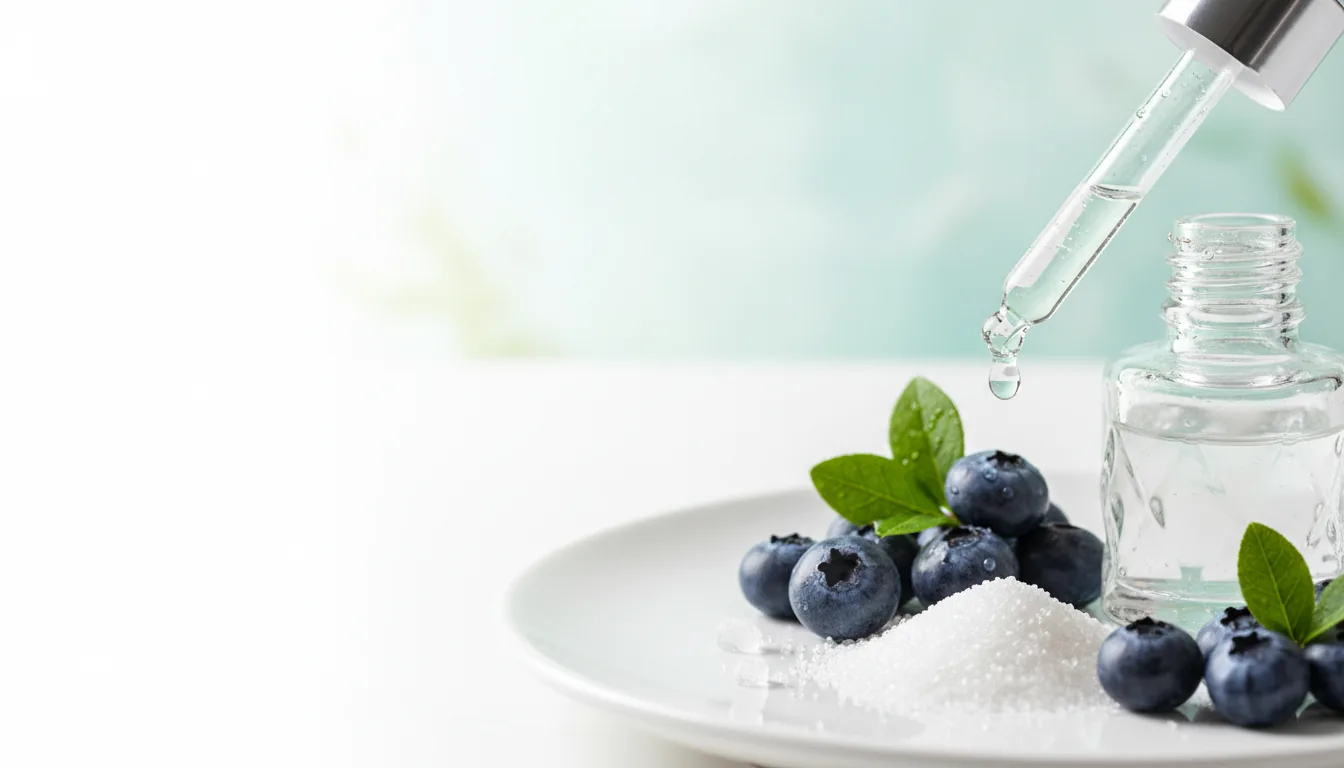
Of all the ingredient pairings trending in metabolic health right now, berberine and inositol may be the one with the most genuine momentum. Search interest in "berberine inositol" has climbed steadily, driven by the overlap between two big audiences: people working on insulin resistance and blood sugar, and the very large community managing polycystic ovary syndrome. Both groups keep arriving at the same two ingredients, and the reason is not marketing accident — it is that berberine and inositol appear to work on insulin from genuinely different angles. This article explains what each one does, why combining them is reasoned rather than random, and what the evidence honestly does and does not support.
As always, we will keep the tone measured. These are supplements, not medicines. They do not cure anything, they are not a substitute for care from a clinician, and the combination specifically has less direct trial evidence than the enthusiasm around it suggests. What follows is the useful, honest middle ground between hype and dismissal.
What is inositol, and what does it do for blood sugar?
Inositol is a naturally occurring sugar-like compound — sometimes loosely grouped with the B-vitamin family, though it is not strictly a vitamin because the body can make some of its own. Its relevance to blood sugar comes down to its role as a second messenger. When insulin arrives at a cell and docks onto its receptor, that signal has to be carried inside the cell to actually do something. Inositol-based molecules are part of that internal relay. If the relay works well, cells "hear" insulin clearly; if it works poorly, cells respond sluggishly — which is a large part of what insulin resistance is.
The two forms that matter most are myo-inositol and D-chiro-inositol. Supplementing them, particularly myo-inositol, has been studied as a way to support insulin sensitivity from the inside, helping cells respond to the insulin they are already producing. The most developed evidence sits in polycystic ovary syndrome, where inositol has been researched for improving how the body handles glucose and for related metabolic markers. It is fair to call inositol one of the better-evidenced single ingredients in this space — while still being clear that "better-evidenced" is a relative term, and that it is a support, not a treatment.
Why combine berberine and inositol: two doors into insulin sensitivity
Here is where the pairing logic becomes genuinely elegant, and it is worth understanding because it is the honest reason people stack these two. Insulin sensitivity is not a single lever; it is a chain of events. Insulin has to be heard by the cell, and the cell then has to act on that message by pulling glucose out of the blood and using it. Inositol and berberine each address a different link in that chain.
Inositol works at the "hearing" end — the second-messenger relay that lets a cell respond to insulin at all. Berberine works further down, largely through AMPK activation, improving the machinery that actually takes up and uses glucose once the signal has landed. In principle, supporting the signal and supporting the response is more complete than doing either alone. This is the same complementary-pathways thinking behind the berberine and Ceylon cinnamon pairing, just aimed at a different pair of mechanisms. The honest caveat is identical too: each ingredient has its own research, but head-to-head trials of the specific berberine-plus-inositol combination are still limited, so the synergy is well reasoned rather than heavily proven.
Prefer one convenient daily blend?
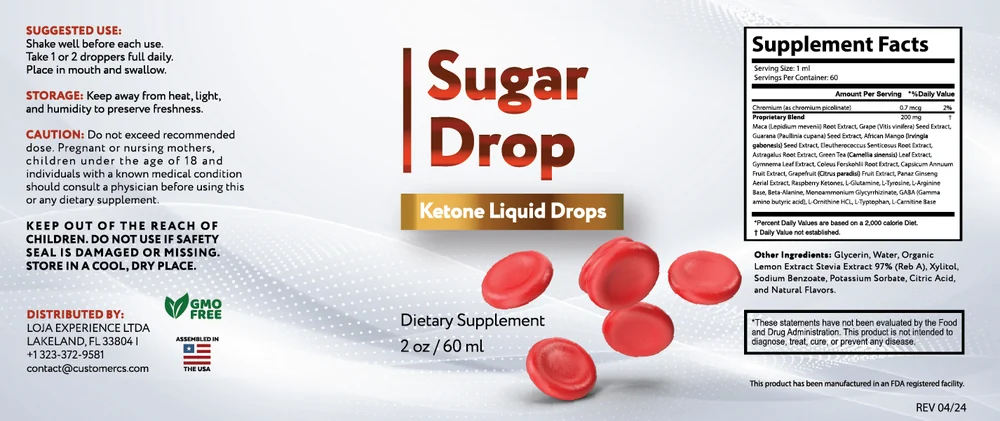
Sugar Drop is not a berberine-and-inositol product — it is a liquid dropper pairing declared chromium with a botanical blend of gymnema, green tea, African mango, maca and ginseng, built for convenient daily blood-sugar support. If a single once-a-day formula appeals more than measuring grams of powder, the full label is published for you to weigh.
See the Official Sugar Drop OfferThe PCOS and insulin-resistance angle
It is impossible to write about this combination without addressing why it is so popular with the PCOS community specifically, because that is where much of the search demand comes from. Polycystic ovary syndrome is strongly linked to insulin resistance, and improving insulin sensitivity is a central plank of managing it. That is exactly the mechanism inositol targets, which is why it has become one of the most discussed supplements in PCOS circles and has a reasonable research base there for supporting insulin sensitivity and metabolic markers.
Berberine enters the same conversation because of its complementary glucose-handling effect, and the two are frequently discussed together in metabolic-health and PCOS communities. But this is precisely the place to be most careful with claims. PCOS is a genuine medical condition with implications well beyond blood sugar, and supplements are not a treatment for it. The honest position is that both ingredients may support insulin sensitivity as part of a wider plan, that the combination specifically has limited trial evidence, and that anyone managing PCOS should be guided by a clinician rather than self-directing their care with supplements. If you are researching this pairing for PCOS, treat it as a question to bring to your doctor, not an answer to buy off a shelf.
Myo-inositol and berberine: the practical facts
| Inositol (myo & D-chiro) | Berberine | |
|---|---|---|
| What it is | Sugar-like second-messenger compound | Plant-derived bioactive alkaloid |
| Where it acts | Insulin signalling (helping cells "hear" insulin) | AMPK pathway (glucose uptake and use) |
| Best-studied use | PCOS and insulin sensitivity | Glucose handling and metabolic markers |
| Typical dose | Grams/day (often ~2–4 g myo-inositol) | Gram-scale/day, split across meals |
| Common downside | Generally well tolerated; mild GI at high doses | Digestive upset; broad drug-interaction potential |
| Evidence for the combo | Promising by mechanism, but rigorous trials of the specific pairing are limited | |
Myth check: "inositol is just a B vitamin, so it can't do much"
This dismissal is common and it undersells the ingredient in a specific way. Inositol is often filed next to the B vitamins, and that mental shortcut makes people assume it is a trivial "top-up" nutrient. But inositol's proposed benefit for blood sugar is not about correcting a deficiency the way a vitamin does — it is about supplying extra second-messenger material to a signalling system that may be underperforming. That is a different kind of action, and it is why inositol is dosed in grams, not the tiny milligram or microgram amounts typical of vitamins. Whether it helps you is an individual question, but "it's just a vitamin" is the wrong reason to write it off.
Myth check: "if it helps insulin, more must be better"
The opposite error is just as common. Because inositol is well tolerated and dosed in grams, some people assume they can keep scaling the dose for a bigger effect. They cannot, and they should not. Studies used specific ranges for a reason, and pushing well past them mostly buys digestive upset, not better results. The same restraint applies to berberine, which is more likely to cause stomach trouble as the dose climbs and carries genuine drug-interaction potential. Sensible supplementation means the studied amount, introduced carefully, not the largest amount you can swallow. Our buyer's guide to blood-sugar supplements covers how to read a label and spot doses that are too low to matter or higher than the evidence supports.
Two ingredients that support different links in the insulin chain is a good reason to be interested. It is not a reason to expect a supplement to do a medicine's job, or to skip the conversation with your clinician.
How much inositol should you take with berberine?
Dosing is where good intentions meet reality. Inositol is taken in grams, not milligrams — studies in PCOS have often used around 2 to 4 grams of myo-inositol per day, sometimes paired with a small amount of D-chiro-inositol in a roughly 40-to-1 ratio that reflects the balance found in the body. Berberine is usually studied at gram-scale daily doses, split into two or three portions taken with meals because a single large dose is harder on the stomach.
Two practical rules make this safer. First, introduce one ingredient at a time. Starting both in the same week means that if something disagrees with you, you cannot tell which one caused it — and it is the most common reason people abandon a stack that might have been fine. Second, if you already take any glucose-lowering agent, remember the effects are additive: adding ingredients that support glucose handling on top of medication can push readings lower than intended, which is a change your prescriber should know about. Follow label directions on whatever product you choose, and treat gram-scale powders and multi-capsule regimens as things to trial deliberately, not casually.
Where a blend like Sugar Drop fits — honestly
If measuring grams of inositol powder and timing berberine capsules around meals sounds like more admin than you want, an all-in-one product may appeal — so let us be straight about what Sugar Drop is. It is not a berberine or inositol supplement, and it does not claim to be. It is a liquid dropper that pairs a declared amount of chromium — a trace mineral involved in carbohydrate metabolism — with a 200 mg botanical blend of gymnema, green tea, African mango, maca and panax ginseng.
Why include it in an article about a different pairing? Because it shares the underlying idea: support blood sugar from more than one direction, in a single convenient daily format, rather than betting everything on one compound. For someone who wants a low-effort routine and is not specifically committed to the berberine-inositol stack, a once-a-day liquid blend is a reasonable thing to consider. The honest limitations stand: it is a proprietary blend, so per-ingredient amounts inside the 200 mg are not disclosed, it contains caffeine-bearing botanicals, and it is a support rather than a cure. If your goal is specifically inositol for insulin signalling, buy inositol; if you want a simple daily blend, weigh Sugar Drop on its published label.
Medical note: this article is general information, not medical advice, and it is not a treatment recommendation for PCOS, insulin resistance or any condition. Berberine and inositol can both affect blood glucose. Speak to a healthcare professional before combining them or adding either to your routine, especially if you have diabetes or PCOS, take glucose-lowering or other medication, or are pregnant, trying to conceive or nursing.
Frequently asked questions
What does inositol do for blood sugar?
Inositol is a sugar-like compound the body uses as a messenger inside the insulin-signalling pathway. Forms such as myo-inositol and D-chiro-inositol act as second messengers that help cells respond to insulin, so supplementing may support insulin sensitivity, particularly in people with insulin resistance. The evidence is most developed in polycystic ovary syndrome, where inositol has been studied for improving how the body handles glucose, though it is not a cure.
Why combine berberine with inositol?
The rationale is complementary mechanisms. Berberine works largely through the AMPK energy pathway to improve glucose uptake and use, while inositol works within the insulin second-messenger system to help cells respond to insulin in the first place. Targeting insulin sensitivity from two different points is the logic behind pairing them, and both are popular with metabolic-health and PCOS shoppers, although rigorous trials of the exact combination are still limited.
Is berberine and inositol good for PCOS and insulin resistance?
Both are widely used by people managing PCOS and insulin resistance, and inositol in particular has a reasonable body of research in PCOS for supporting insulin sensitivity and metabolic markers. Berberine adds a complementary glucose-handling effect. That said, these are supplements, not treatments, evidence for the combination specifically is limited, and PCOS care should be guided by a clinician rather than self-managed with supplements alone.
How much inositol should I take with berberine?
Inositol is typically dosed in grams rather than milligrams, and studies in PCOS have often used around 2 to 4 grams of myo-inositol per day, sometimes combined with a small amount of D-chiro-inositol in a roughly 40-to-1 ratio. Berberine is usually studied at gram-scale daily doses split across meals. Introduce one ingredient at a time, follow label directions, and check with a clinician if you take other glucose-lowering agents.
Is inositol best studied for PCOS?
Inositol is a second messenger that supports insulin signaling and is best studied in PCOS.
Related reading
Scientific references
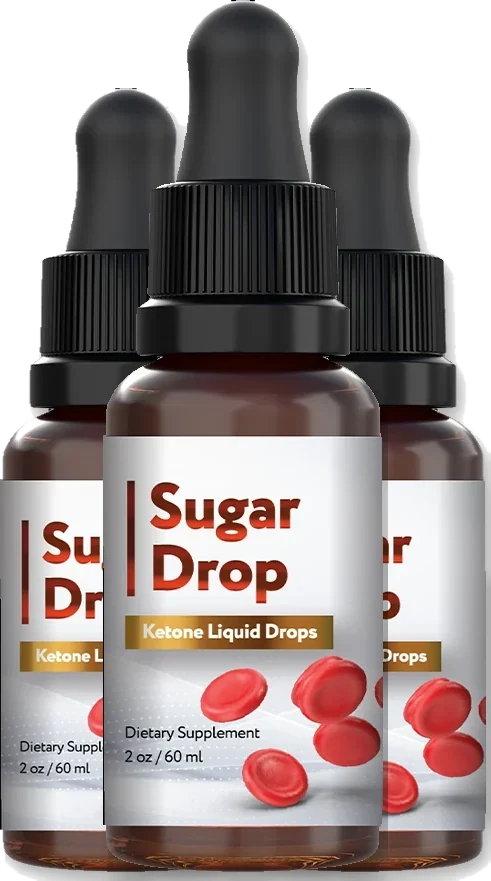
See the full Sugar Drop label before you decide
Declared chromium, the 200 mg botanical blend and a 60-day manufacturer money-back window — a convenient daily blend to weigh against measuring grams of powder and stacking capsules.
Check the Official Store